


Exhibitor Spotlight: Rimere
Wednesday, 9 September 2026
Tell us about your company in 100 words or less.
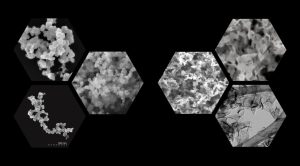
Rimere is developing a programmable plasma platform for controlling how carbon forms. Carbon is not a single material: structure and morphology decide how it performs, and applications as different as batteries, conductive coatings and pressure vessels need different properties. Conventional carbon-production routes are generally optimized around fixed process conditions, which constrains the structures they can reliably produce. By controlling the plasma environment in which carbon forms, Rimere has demonstrated materially distinct carbon morphologies from a common methane feedstock on a single reactor platform, including two characterized morphologies: Branched Nano-Spheres and Crumpled Nano-Sheets.
What problem does your business solve for customers?
Manufacturers generally take the carbon a process happens to produce, then characterize it, grade it and formulate around the result. The properties they actually want — morphology, structure, surface behavior — are inherited rather than specified. Rimere works the other way. We control the plasma conditions the carbon forms in, so process conditions become design variables. The problem we are working on is the absence of choice at the point of formation.
Which industries benefit most from your technology?
The applications our material is currently being evaluated against are energy storage, conductive coatings, electromagnetic interference shielding, composite reinforcement, thermal interface materials and concrete additives. The common thread is that all six care about structure rather than about carbon in the abstract, which is the whole reason morphology control matters.
How does your solution improve productivity, quality or efficiency?
What we are demonstrating today is control rather than throughput. On one a single reactor platform from a single methane feedstock, we have shown materially distinct carbon morphologies — the same equipment yielding structurally different material because the plasma conditions were changed deliberately. For a manufacturer, that shows up first in qualification: when structure can be specified rather than discovered, the characterization and formulation work that normally follows a new material gets shorter and more predictable. So what we are showing at the Advanced Materials Show is the capability itself. We will publish productivity and efficiency figures when third-party work supports them, and not before.
What technical challenge do your customers typically come to you with?
The parties evaluating our material bring us the same problem almost every time, and it is the one we are demonstrating against. They have a performance requirement that the grade available to them does not meet, and no route to changing the material itself rather than the formulation around it. So what we are showing them is the material response — that structure can be moved deliberately, and that a specification can start from the property a manufacturer needs rather than from whatever the process happened to yield.
Which industries are driving the greatest demand for advanced materials today?
From where we sit, energy storage and electrification pull hardest, because the performance requirement is moving faster than the material supply behind it. Lightweighting in composites and pressure vessels is second. We would rather describe the pull we see than quote a market figure, because the published numbers for engineered carbon vary widely depending on what is being counted.
 |
 |
What products, technologies or services will you be showcasing at The Advanced Materials Show USA?
Our engineered carbon materials — Branched Nano-Spheres and Crumpled Nano-Sheets — shown as electron micrographs at scale. We are highlighting the elements of our current technology platforms: Sol is our engineered carbon materials platform, and Mitigator applies the same plasma-control foundation to methane management and resource recovery. We look forward to robust discussions at our booth around both of these product lines.
Why is exhibiting at the show important for your business this year?
This is our first year exhibiting and we are here to educate and promote our new product lines. Garrett Hill and I have five stage appearances between us across MS&T26, the Advanced Carbons Council and your Technology Showcase, which tells us the technical community is willing to hear the argument. The show puts specifiers, standards people and formulators in one building, and those are the conversations that shape what we build next.
Is there a live demonstration, giveaway or exclusive experience attendees shouldn’t miss?
What is worth stopping for is the micrograph wall: the two morphologies at scale, side by side, grown from the same methane feedstock in the same reactor, with the process conditions that separate them. It is the entire argument in one look, and it needs no claim attached to it. Technical data sheets are available at the stand to anyone who wants the detail after a real conversation.
What are you most looking forward to at the event?
The conversations. This is our first year, so nearly every one of them is a first. The building holds the specifiers, the standards people, the formulators and the process engineers who will decide whether engineered carbon gets designed into a product or worked around — and for two days they are all within a few minutes of each other. Five stage appearances are a good way to start a conversation, but the stage is not the point. The twenty minutes afterward is. We would rather leave Pittsburgh with thirty people who know exactly what we do than with a full badge scanner.
Visit Rimere on booth 1131 at The Advanced Materials Show in Pittsburgh on October 6 & 7 2026.